
What Are Wayfinding Solutions? A Guide To Effective Navigation In Commercial Spaces
Introduction
A well-designed commercial space should help visitors understand where to go without repeatedly asking for directions. In Dubai, where offices, retail centres, hotels and mixed-use developments can span multiple floors and entrances, clear navigation is especially important. Visitors may need to locate reception areas, meeting rooms, lifts, parking zones, washrooms or individual retail units quickly. Effective wayfinding combines signs, graphics, colours and spatial cues to make movement through these environments easier and more intuitive.
What Are Wayfinding Solutions?
Wayfinding refers to the systems used to help people understand their surroundings and move from one location to another. It goes beyond placing directional signs at key points.
A practical wayfinding system considers the complete visitor journey. It identifies where people may become confused, what information they need at each stage and how that information should be presented.
In a Dubai office building, for example, visitors may enter through a large reception area before moving towards lifts, different floors and individual offices. A combination of entrance signs, directional signs, floor identification and room numbers can create a clear route.
Key Elements Of Effective Wayfinding
A successful system brings several visual and physical elements together. Each element should provide useful information without making the environment feel cluttered.
Directional Signs
Directional signs guide visitors towards destinations such as lifts, reception desks, parking areas and facilities. They work best when positioned before decision points, giving people enough time to understand which route to take.
Identification Signs
Identification signs confirm that visitors have reached the correct location. These can include room numbers, department names, floor signs and retail unit identifiers.
Maps And Information Boards
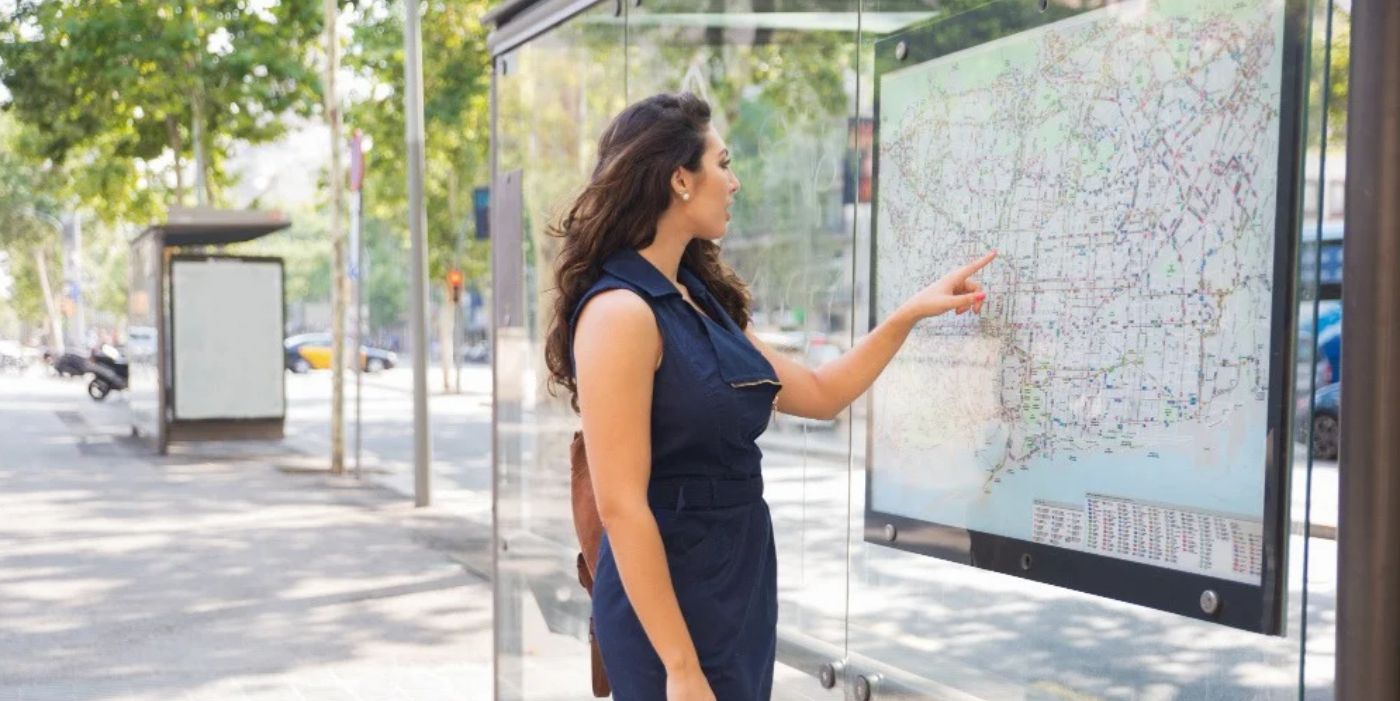
Larger commercial properties may need maps to help visitors understand the overall layout. In a shopping centre or large business complex, a well-positioned map can reduce confusion by showing key destinations and their relative locations.
Environmental Graphics
Graphics can reinforce navigation through colours, patterns, icons and wall applications. For example, different areas of a large Dubai facility could use consistent visual cues to help visitors recognise specific zones.
Where Can Wayfinding Be Used In Dubai?
Different commercial environments require different approaches to navigation. The system should reflect how people use the space rather than relying on a standard set of signs.
Common applications include:
- Corporate Offices: Clear floor, room and department identification can help employees, clients and visitors move through multi-level workplaces.
- Retail Spaces: Directional signs can guide shoppers towards departments, facilities, entrances and exits without interrupting the shopping experience.
- Hotels And Hospitality Venues: Guests often need immediate guidance towards reception, restaurants, lifts, meeting rooms and other facilities.
- Healthcare Facilities: Visitors may need straightforward directions to departments, waiting areas and service points, making clarity particularly important.
- Commercial Developments: Mixed-use properties can use coordinated signage to connect entrances, parking areas, retail units and shared facilities.
How To Plan A Wayfinding System
Planning should begin with understanding how people actually move through the property. Simply adding more signs does not necessarily make navigation easier.
Start by identifying the main destinations and the points where visitors need to make decisions. Then consider the information required at each stage.
You should also review:
- Visibility: Signs should be positioned where visitors can easily see them before reaching a junction or decision point.
- Consistency: Similar destinations should follow consistent naming, symbols and visual treatment throughout the property.
- Readability: Text, symbols and contrast should remain easy to understand from an appropriate viewing distance.
- Accessibility: Navigation should consider different user needs, including clear visual information and accessible routes.
- Brand Alignment: Signage should complement the surrounding architecture and established brand identity without compromising clarity.
Wayfinding For Large Commercial Projects
Large developments often require more detailed planning because visitors may enter from several points and use different routes. A Dubai business park, shopping destination or mixed-use development may need navigation across outdoor and indoor areas.
A coordinated approach can connect elements such as entrance signage, building identification, parking directions, floor signs and internal directories. For projects involving several locations, planning, prototyping, fabrication, logistics and installation also need to work together to maintain consistency.
Conclusion
Good navigation should feel straightforward to visitors. By considering movement patterns, decision points, visibility, accessibility and brand consistency, you can create a commercial environment that is easier to understand and use.
For Dubai businesses and property managers, Wayfinding Solutions can bring together signage, environmental graphics and directional information to support clearer movement across offices, retail spaces and other commercial facilities. Velement provides signage, environmental graphics and project management services that can support these requirements from planning through to installation.
FAQs
- What Is The Difference Between Wayfinding And Directional Signage?
Directional signage is one part of wayfinding. Wayfinding covers the wider navigation system, including directional signs, identification signs, maps, symbols, environmental graphics and other visual cues.
- Where Should Wayfinding Signs Be Installed?
Signs should generally appear before important decision points such as entrances, junctions, lifts and changes in direction. Their exact position depends on the layout and movement patterns within the property.
- Can Wayfinding Be Integrated With Corporate Branding?
Yes. Colours, typography, symbols and materials can be aligned with a brand identity while keeping navigation clear and practical. The priority should remain legibility and ease of use.
- Is Wayfinding Useful For Small Commercial Spaces?
Yes. Even smaller offices, clinics, shops and business premises can benefit from clear entrance, room and directional information. The system simply needs to match the scale and complexity of the space.
- Who Can Help Plan Wayfinding For A Commercial Property?
A signage and environmental graphics specialist can assess the space, identify navigation requirements and develop suitable signage and visual applications for the property.