
What Are Office Signs? Types, Uses, And Their Role In Workplace Navigation
Introduction
A well-planned workplace should be easy to understand from the moment a visitor enters. In a busy Dubai office building, people may need to find reception, meeting rooms, lifts, toilets or specific departments without stopping to ask for directions. Clear signage helps create that structure. It identifies spaces, provides directions and supports a consistent workplace experience. For businesses operating in Dubai, signage can also contribute to accessibility and should be planned with local requirements in mind.
What Are Office Signs?
Office signs are visual communication tools used to identify rooms, departments, facilities and routes within a workplace. They can range from a simple door sign to a complete wayfinding system covering an entire office or commercial facility.
Effective signage gives people information at the point where they need it. For example, a visitor approaching a corridor should be able to understand which direction leads to the boardroom, reception or other important facilities without relying entirely on staff assistance.
Common Types Of Office Signs
Different areas of an office require different types of signs. A well-designed system combines several sign types rather than relying on one format.
Reception And Identification Signs
Reception signs identify the organisation and establish a clear arrival point. These can include company names, logos and branded wall signs. Door signs can then identify individual offices, meeting rooms and departments.
Directional And Wayfinding Signs
Directional signs help people move through the workplace. They may use arrows, text, numbers, colour coding or recognised symbols to indicate routes to destinations such as:
- Meeting rooms: These signs help visitors and employees locate rooms without interrupting reception staff or other employees for directions.
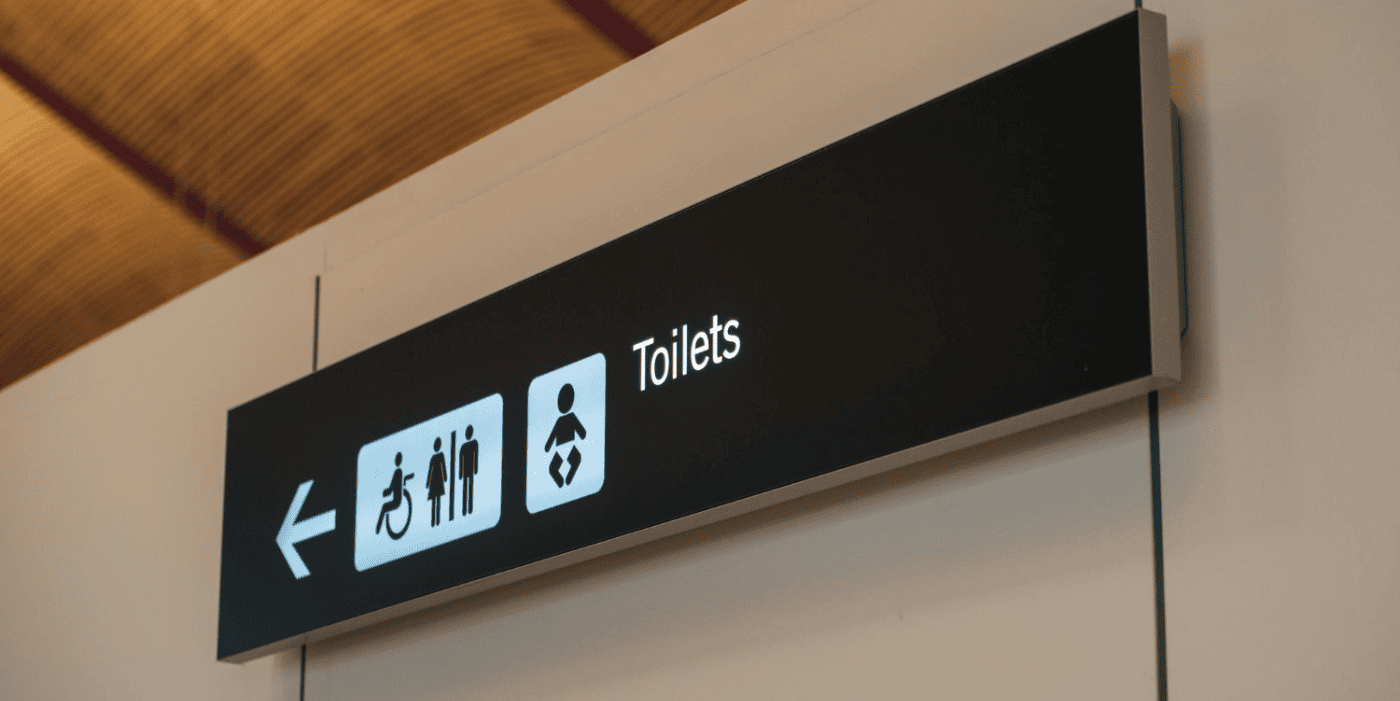
- Facilities: Signs can identify toilets, lifts, staircases, break areas and other commonly used facilities.
- Departments: Larger offices can use directional signs to distinguish different teams, floors or work zones.
Velement notes that wayfinding solutions can combine materials such as acrylic, metal, wood, vinyl graphics and digital signage depending on the environment and requirements.
Regulatory And Safety Signs
These signs communicate important instructions, restrictions or safety information. Examples include fire exit signs, emergency information, restricted-area notices and other regulatory messages. Their placement and design should be considered alongside the applicable building and fire safety requirements.
How Office Signs Improve Workplace Navigation
Good navigation is less about adding more signs and more about placing the right information in the right location. Dubai’s Building Code states that wayfinding information should be positioned at key decision-making points and that information should be kept to a minimum without unnecessary duplication.
A practical workplace signage system should therefore:
- Identify: Tell users where they are and what a particular space is used for.
- Direct: Provide clear instructions before or at points where people need to choose a route.
- Confirm: Reassure users that they are following the correct path towards their destination.
- Recognise: Make the final destination easy to identify when they arrive.
This approach is particularly useful in large Dubai offices, multi-floor workplaces and buildings that accommodate several businesses.
Designing Office Signs For Dubai Workplaces
Dubai offices often serve employees, clients and visitors from different linguistic and cultural backgrounds. Signage should therefore be clear, consistent and easy to understand.
The Dubai Building Code includes specific wayfinding and accessibility requirements. It states that signage with text should be provided in both English and Arabic. It also addresses factors such as contrast, glare, positioning and tactile information.
When planning signage, consider:
- Language: Use English and Arabic where required so essential information is accessible to a wider range of users.
- Visibility: Choose sufficient contrast and avoid glare or visual obstructions that can make signs difficult to read.
- Consistency: Use the same terminology, symbols and visual hierarchy throughout the workplace.
- Placement: Position signs where users naturally make navigation decisions rather than placing them where they are difficult to notice.
The Role Of Signage In Accessible Workplaces
Accessibility should be considered as part of the signage system rather than treated as an additional feature. The Dubai Building Code highlights the use of visual, tactile and other forms of information to support people with different needs. It also specifies requirements relating to Braille, raised characters, contrast and sign positioning.
For office managers, this means reviewing whether signs can be easily seen, understood and accessed by different users. A consistent approach can also reduce confusion and make the workplace easier to navigate independently.
Choosing Materials And Finishes
The material used for a sign affects its appearance, durability and suitability for the location. For example, acrylic can work well for contemporary reception and room signs, while metal may suit corporate environments where a more durable finish is required.
The choice should consider the office interior, expected traffic, cleaning requirements, lighting and the distance from which the sign needs to be read. Velement’s signage services include indoor signage using materials such as acrylic, metal, vinyl and foamboard.
Conclusion
Effective workplace signage helps employees and visitors understand a space, find destinations and move through the building with greater confidence. For Dubai businesses, the planning process should consider visibility, bilingual communication, accessibility, placement and consistency alongside the visual identity of the workplace.
A structured signage programme can bring these elements together across reception areas, rooms, corridors and shared facilities. Businesses planning Office Signs can work with an experienced signage and visual communication provider such as Velement to develop solutions suited to their workplace environment and navigation requirements.
Frequently Asked Questions
- What Is The Main Purpose Of Office Signage?
The main purpose is to communicate information about spaces, routes, facilities and safety. Good signage helps people navigate a workplace with less confusion and less dependence on staff directions.
- Where Should Directional Signs Be Placed?
Directional signs should be placed at important decision points where users need to choose between different routes. Dubai’s Building Code specifically highlights key decision-making points as important locations for wayfinding signage.
- Should Office Signs Be In Arabic And English?
For applicable wayfinding signage in Dubai, the Building Code states that signage with text should be provided in both English and Arabic. Businesses should consider the relevant requirements for their specific premises and signage application.
- Can Office Signs Also Support Branding?
Yes. Reception signs, room identification signs and other environmental graphics can incorporate brand colours, typography and visual elements while still keeping information clear and functional.